
Description
Sodium Azide: Chemical Properties, Industrial Applications and Essential Safety Information
Introduction to Sodium Azide
What Is Sodium Azide?
It is primarily associated with specialised scientific and industrial environments. Because of its high toxicity, sodium azide requires strict professional oversight and appropriate chemical safety controls.
Common Industrial and Scientific Applications
Sodium azide has been associated with several specialised applications, including:
- Automotive safety systems: Historically used in certain airbag inflation systems.
- Laboratory research: Used in specialised research and laboratory applications.
- Chemical manufacturing: Used as a chemical intermediate in certain industrial processes.
- Scientific preservation: Used in some laboratory preservative applications.
Its applications require appropriate regulatory compliance and professional safety procedures.
Chemical Properties of Sodium Azide
Some important identifying properties include:
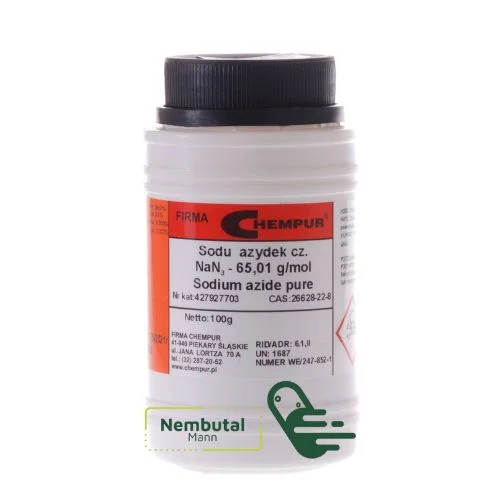
- Chemical name: Sodium azide
- Chemical formula: NaN₃
- CAS number: 26628-22-8
- Appearance: White crystalline solid
- Odour: Odourless
- Molecular weight: Approximately 65.01 g/mol
These properties help identify the compound in scientific and chemical reference materials.
Health Hazards and Toxicity
Sodium azide presents serious health risks. Exposure through inhalation, ingestion or skin contact can cause severe poisoning.
Potential symptoms include:
- Headaches and dizziness
- Nausea and vomiting
- Difficulty breathing
- Changes in heart rate
- Low blood pressure
- Loss of consciousness
- Severe cardiovascular complications
Serious exposure can be life-threatening and requires immediate medical attention.
Important Chemical Safety Considerations
Sodium azide must only be managed by appropriately trained professionals in authorised facilities.
It can react dangerously with certain acids and metals, potentially producing toxic gases or explosive compounds. It must never be casually disposed of in household plumbing or drains.
Members of the public should not attempt to handle, transfer, mix or dispose of this chemical.
What to Do in Case of Exposure
Suspected exposure to sodium azide should be treated as a medical emergency.
Anyone who may have been exposed should receive urgent professional medical assessment, even if symptoms initially appear mild.
Conclusion
Sodium azide is a specialised inorganic chemical with a history of industrial and scientific applications. However, its extreme toxicity and potentially dangerous chemical reactions make it unsuitable for casual handling.

Reviews
There are no reviews yet.